In April 2026 we looked at how microchips are made and then had a quick glimpse of future chips.
Now we are not talking about the chips on your plate, but the micro electronic circuits that power and control all our electric devices, whether they are in the kitchen, the living room or the office.
Making microchips is not a fast process and there are a lot of rejects due to the need for material purity and cleanliness as well as good connections. It is capital intensive especially as we are not talking about a small machine we are talking about complete factories costing half a billion dollars.
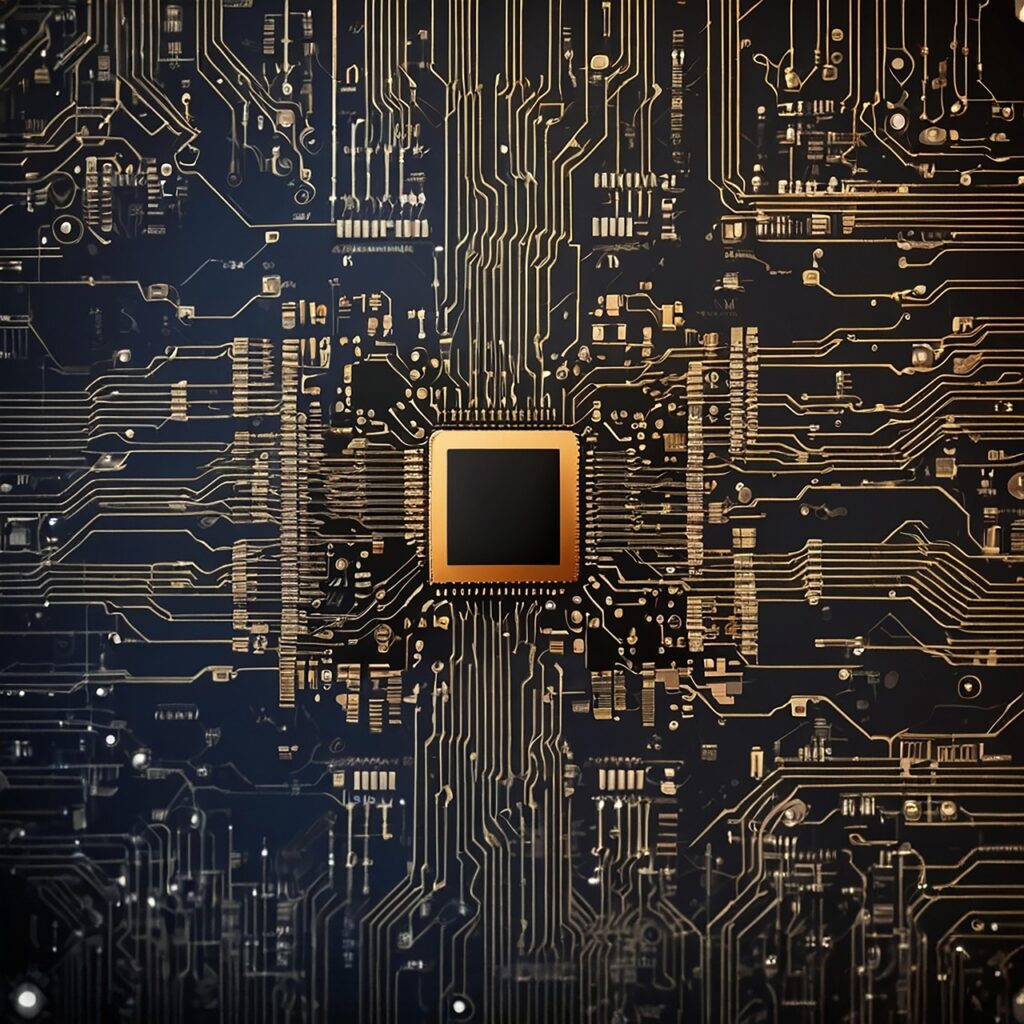
The manufacturing process starts with silica sand which is then heated and purified to reach 99.9999999% purity.
A seed crystal is dipped into molten silicon and slowly pulled out and rotated forming a large ingot of pure material.
The ingot is then sliced into paper thin wafers which are polished to mirror finish to form the base for hundreds of chips.
The wafer is coated with a light sensitive material and then exposed to UV light through a mask drawing the complex circuit patterns on the wafer.
Chemicals are used to remove or etch the wafer to create precise circuit patterns.
Thin films of material of conductors or insulators are added through deposition.
The silicon is also doped with chemicals such as boron or phosphorus to change the electrical conductivity thereby forming transistor switches.
Once the transistors are formed they have to be linked together using highways of metal deposits (usually copper or aluminium) in order to link the billions of transistors. The process is repeated several hundred times building up a block of microchips. The wafers are then cut using diamond coated wires to produce individual microchips, then enclosed in packaging with soldering pins for connections to other electronic devices.
Every chip is tested for functionality and placed in a protective case with external pins allowing it to be soldered onto a circuit board. The whole process can take upto three months to build the most complex of chips.
We watched two videos taking us around the factories so we could see the scale and complexity of the processes.
Whilst these factories require massive amounts of capital to come on stream, such that the number of companies cable have such funding becomes very much reduced. This applies to both the producers of the machinery and processes as well as the operators of the facilities. Then we learnt of an even more capital expensive process which will come on stream in about 5 years time and this uses X-ray lithography to form the circuits. It is claimed that more complex chips can be built at a lower cost.