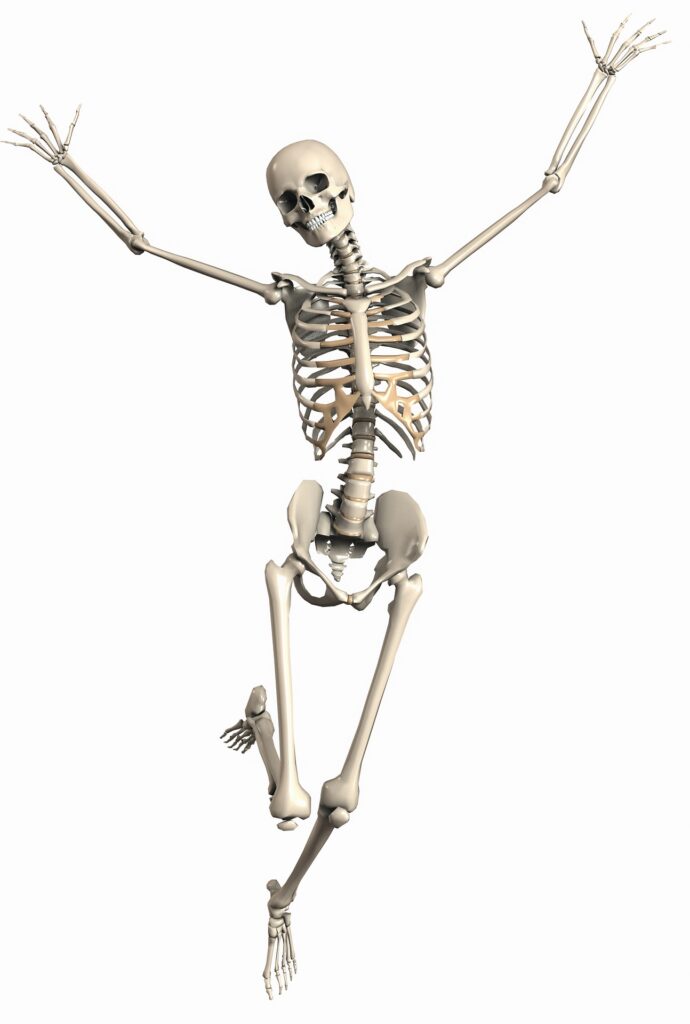
This month we had our own Frances Gilbert give one of her enlightening talks on a “A Journey to the Centre of the Long Bone”.
We all live within our bones, but do we know much about them?
This was an eyeopener for many of us as we did not know that bones could be so complex, but more of that later.
Frances started by making sure that we were all measured and asked us to guess our height. All the men had shrunk by 0.5 – 1 inch (12 - 25 mm). Whilst some of the ladies had shrunk by 1.5 - 2 inch (37 - 50mm); but two had grown, which was an unexpected outcome. Various salacious views of this were presented by the audience but they will not be repeated here! The general trend is that we shrink with age for several reasons and the best way to reduce the shrinkage is to keep standing up and make sure gravity is doing its best to strength our bones.
We started looking at different sections of bone using the long femur bone as an example.
There is compact bone on the outside, spongy bone formation at the ends and a medullary cavity in the centre containing bone marrow.
We further examined the bone structure and saw osteons, which are the cylindrical, functional units of bone. In adults, osteons mainly form in existing compact bone through the continuous process of bone remodelling. In long bones, osteons form parallel to each other and parallel to the long axis of the bone and, thus, appear round in cross-sectional anatomy.
The spongy bone is a complex hollow structure of “random” bridge structure formation.
.png)
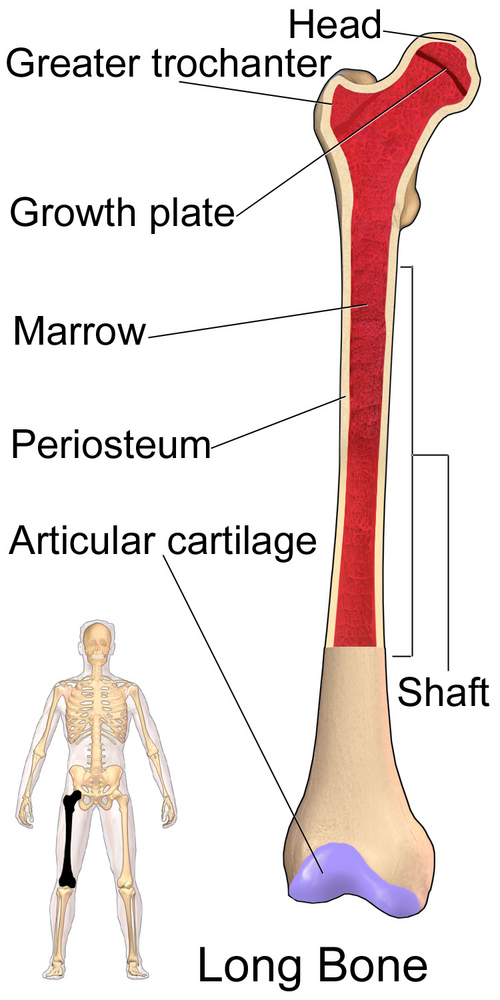
Bones consist of around 40% of the total body weight with the bone matrix being mainly water but containing proteins, collagen, calcium carbonate and calcium phosphate. There are bone cells full of osteocytes, osteoclasts and osteoblasts, and then to add to the complexity there are blood vessels and nerves.
So, after taking a virtual shot of blood from one member, isolating 20 or so red blood cells, these were re-injected into the virtual patient and sent on a journey around the body and finally into the long bone, where we saw where the blood goes to within the bone.
Interesting facts about bones:
- 5 - 7% bone mass is remodelled every week
- Distal part of femur is replaced roughly every 6 months
- Spongy bone is replaced roughly every 4 years
- Compact bone is replaced roughly every 7-10 years
- Bone is half as strong as steel in resisting compression
- Bone is as strong as steel in resisting tension
Interesting statistics about femur bones:
- Females: lifetime risk of fracture: 16-18%
- Women at 80 years: 1:5
- Women at 90 years: 1:2
- Males: lifetime risk of fracture: 5-6% (Lower than for females. Breakages occur at different times in life because generally males are greater risk takers)
There were four ladies in the audience and although one in five women over 80 would suffer a broken femur, they could rest assured they were safe because the group leader’s wife was at home with a broken femur. Statistics never lie!
Finally, to put everything into perspective we watched three short videos on the various aspects of bone structure and how it is constantly regenerating itself or healing in the case of fractures.