Our April meeting was the third annual Sevens concept where members are asked to give a short talk of no more than seven minutes and seven slides, sufficient to educate the group on topics which they would normally not know too much about.
Pheromones
Carol Payze gave a talk about pheromones. In the 19th Century, one scientist postulated there were chemical messages which could attract moths, but it took almost 100 years before anybody was able to discover the pheromones that were causing this reaction. It has now been identified that these chemical messages can be detected in the vomeronasal organ - which is located in the nasal cavity, just above the roof of the mouth in many vertebrates.
Different animals use chemical messages for different purposes, for example identifying territory, aggregation, alarm, sex, and trails.
Pheromones are not just for sniffing!
The Man Who Can Control Bees
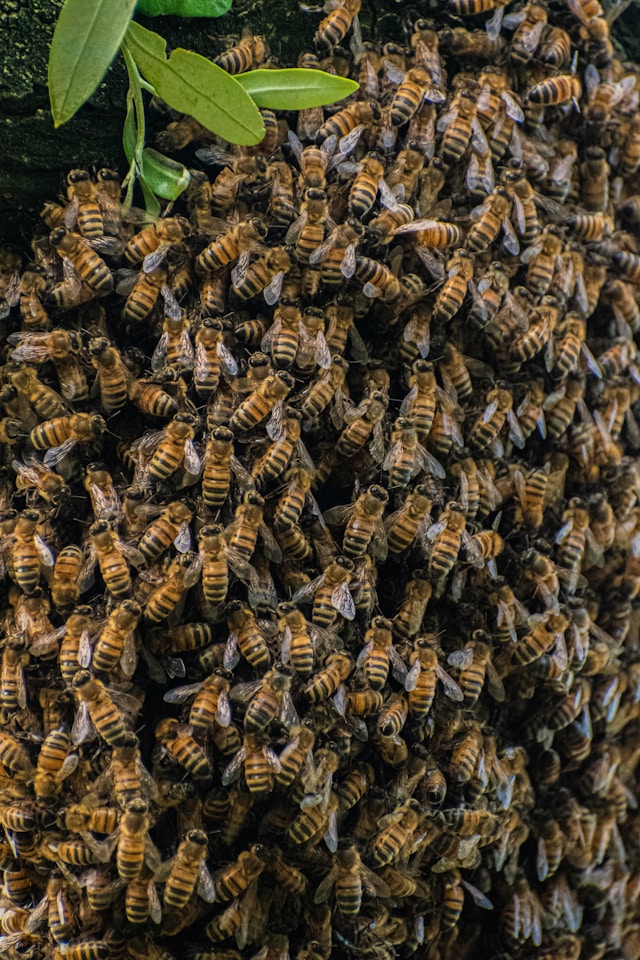
Watch this YouTube video - using pheromones from the queen of the colony, this scientist can cause a swarm on his body and not suffer a single sting.
Spiders
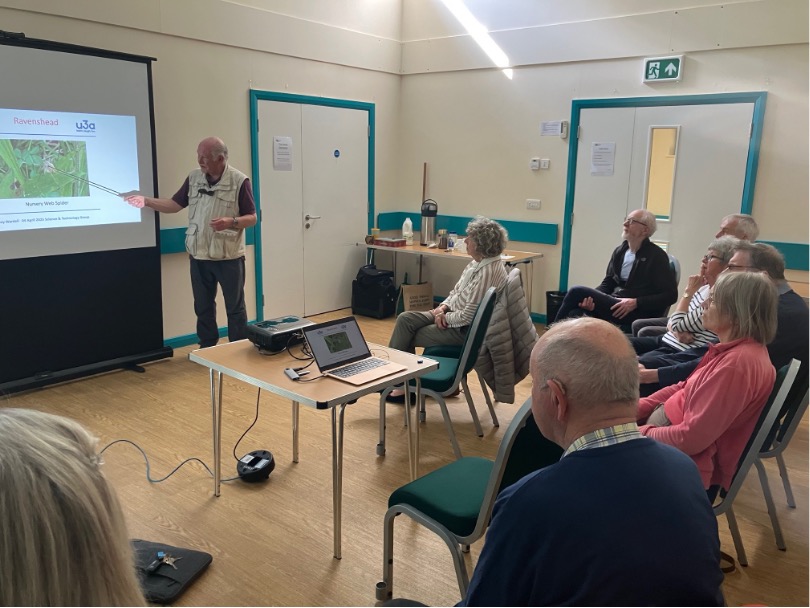
Tony Wardell gave a talk on Spiders, which he dedicated to the late Jane Hampton who was originally involved in initiating this subject.
We learnt that spiders are not insects as they belong to a totally different species. They are arthropods with 8 jointed legs, an exoskeleton, a body of two parts - head and abdomen - and eight eyes.
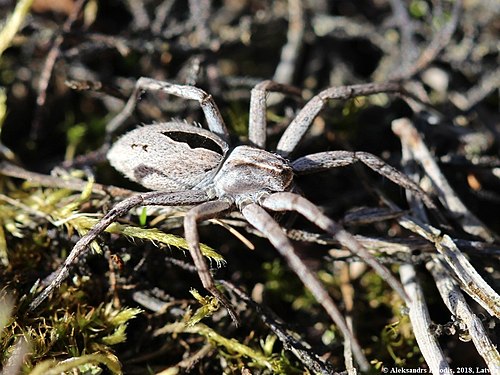
Tony spoke about the life cycles of some types of spider. The reproductive sequence is started by the male injecting his sperm from his palp into the female, which generally ended by the female devouring the male. This might have seemed somewhat gruesome, but the female after laying the eggs would curl up within the spider nest of gossamer silk and then decompose so that the young had a good food source when they hatched. Tony gave examples of Wasp spiders, Diamond Back Spiders and Ladybird spiders, Raft Spiders and Nursery Web spiders.

Vitamin D and Bone Health
Jane Baxter spoke about Vitamin D and its role in keeping our bones healthy.
There are 13 essential vitamins, classified as water soluble or fat soluble - Vitamin D belongs in the latter group. There are few dietary sources of Vitamin D, the main ones being oily fish, egg yolk and liver.
In humans the primary natural source of Vitamin D is endogenous, i.e. produced by the body itself, and this begins in the skin through a photochemical reaction with ultraviolet B radiation from sunlight. Once activated, the primary role of Vitamin D (also known as calcitrol at this stage), is to regulate the availability of calcium and phosphorus in the blood. This is done by increasing absorption of these minerals from the diet and if necessary, withdrawing them from bone tissue. If the latter occurs over a long period of time the bone matrix can be weakened.
There is insufficient UVB radiation in the Northern Hemisphere in winter to permit endogenous synthesis of Vitamin D. The UK Government advises everyone to consider supplementation of Vitamin D during October to late March.
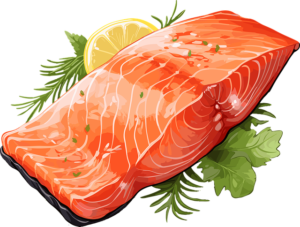

Oily fish and egg yolk - both dietary sources of Vitamin D
Smart Meters
Our fourth talk was by Richard Llewellyn on Smart meters.
We were told that these modern meters will become more important in our lives as energy companies use them for variable pricing, allowing us to utilise appliances in time of low electrical demand. We could see how energy companies can turn the electrical supply 0n and Off when recharging electric cars to give a win-win situation where they reduce their cost of buying energy and we, the consumer, get the cheapest energy supply for the task.