Jean Lewis, Ravenshead u3a
A few years ago, Jean joined a campaign to seek pardons for the WW1 military men who were shot at dawn.
After a lot of effort, families were given an official pardon, and they were asked to join in the Cenotaph Parade and hand in wreaths for remembrance
Jean’s uncle, William Henry Randle of Sherwood Foresters was one of those unfortunate soldiers to be shot. He had enlisted and immediately sent to Gallipoli where his first task was helping to bury dead soldiers.
After being repatriated back to UK with shrapnel injuries he was then sent to The Somme.
After days in the trenches his nerves failed him and he left his post. Captured two weeks later and issued with a death penalty, his execution was delayed by two months because they could not muster a firing squad due to dysentery in the trenches
William is remembered with one of the oak posts in the Shot at Dawn memorial set in the most eastern part of the Arboretum which is the first part to see the dawn.
Jean has visited a few times but hopes to go again with our u3a.
To add to Jean’s story, she managed to locate her uncle’s grave in a tiny village in Northern France called Cavillon
Jean asked a local person if he could let the local mayor know. The mayor arrived in a huge black Mercedes. Jean gave her a copy of the Government’s pardon, and the mayor told Jean she would hang it on the wall in her Mayor’s Parlour.
During Jean’s investigations of events leading to her uncle’s death, she discovered that William Henry had left his trench position to find his older brother who was in the Yorkshire Regiment. He was seeking comfort but never found him. He was asked to confirm his brother's name, and he said Jack, but his proper name was John, though known as Jack.
William was 20 years of age when he was shot for desertion.
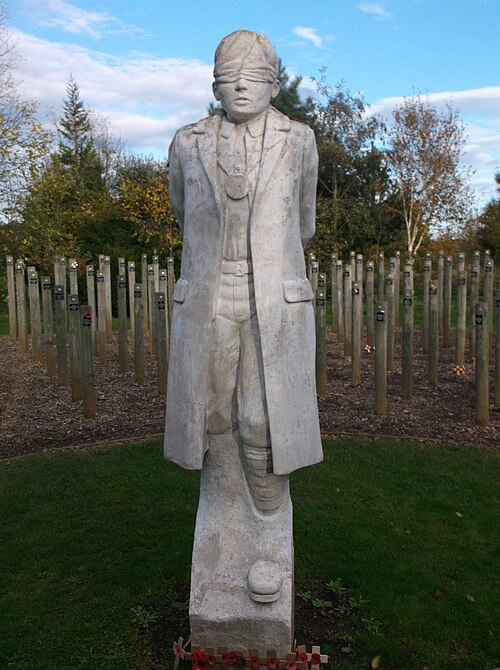
The Shot at Dawn Memorial at the National Memorial Arboretum, commemorates 309 British and Commonwealth Soldiers who were shot for, amongst other things, desertion, cowardice, mutiny and sleeping at post.
In 2006 they were officially pardoned by the British Government.