The topic for July 2026 was 'The future of agriculture'. Most of us were aware of the move to robotics and selection of cash crops from Jeremy Clarkson exploits on Clarkson’s Farm TV show. Aside from Clarkson, there are many other people looking at how agricultural techniques can be progressed to meet the needs of a steadily growing population.
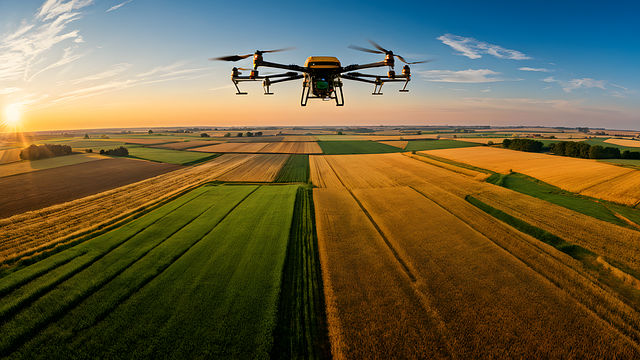
We started our meeting by looking at the EU, who have realised their 9.1 million farms may not be sustainable in the long term if they continue in their present ways. They are concerned that younger people are leaving the farming community and are trying to encourage young people to invest in new technologies with grants up to £300,000 which will facilitate good long term careers for young people. The EU is looking at the whole of the food chain, ensuring long term food security, diversity of supply chains, and working towards fairer competition. Rules will be made simpler to accelerate the introduction of fertilisers, pesticides and biocides along with simplification of accreditation for these new methods.
Secondly we considered vertical farming, with an emphasis on strawberries. A Japanese man who studied for his MBA in America set up a business with friends to try to replicate the sweetness of Japanese strawberries. He realised that all American production was focussed on quantity for US supermarkets and their consumers, where a low price was the main concern. Quality and taste had been conveniently forgotten. The friends set out on a journey to develop year round growing of strawberries in vertical farms. This is now a very successfully enterprise. Robotics , instrumentation, uv lights, sensors and even the use of bees for pollination, have allowed them to significantly increase crop yields with less waste.
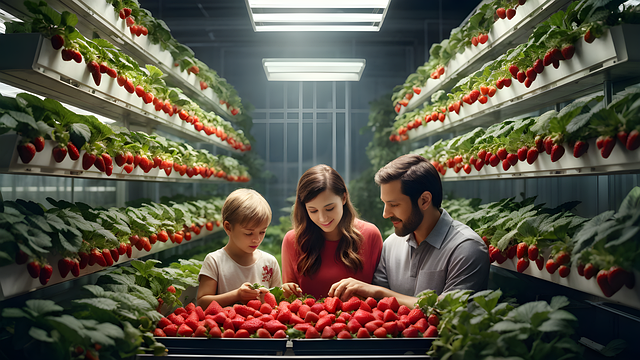
Similarly, James Dyson has invested £200 million in a 26 acre glasshouse in Lincolnshire also focusing on growing strawberries. Rotating ferris wheels operate around the clock, with sensors monitoring the amount of UV light each plant is receiving to ensure growth is consistent and uniform. Other crops are used to 'feed' aerobic digesters which generate electricity to power the site and heat the glasshouse out of season. They claim a 250% increase in yield, the author confirming the strawberries are uniform in size, colour and sweetness. Dyson is looking to repeat this success for other crops.
We understood that within the food supply chain, over half the crops are wasted for a variety of reasons. One group in American have developed sprays for all types of fruit and vegetables using a natural product based on tomato skins. The spray can significantly extend the shelf-life of picked crops by up to 14 days, and replaces the wax materials typically used on apples and soft fruits. However, vested interests have shown a preference for the status quo, as people constantly seek to replace their old decaying stock of fruit and vegetables. This is the simplest, capitalist view that profits come first. Change will come as other interests make more profits by investing in the future.
Finally we learnt about the Nation Alternative Protein Innovation Centre, set up by the University of Leeds, Imperial College London, the University of Sheffield and the James Hutton Institute. This group are using funds from the Bio-technical and Biological Sciences Research Council and Innovate UK to develop alternative proteins, with 'meats’ cultivated from animal cells, plants or produced by fermentation.