Visit to the Rock Cemetery Ru3a Photography for Fun group

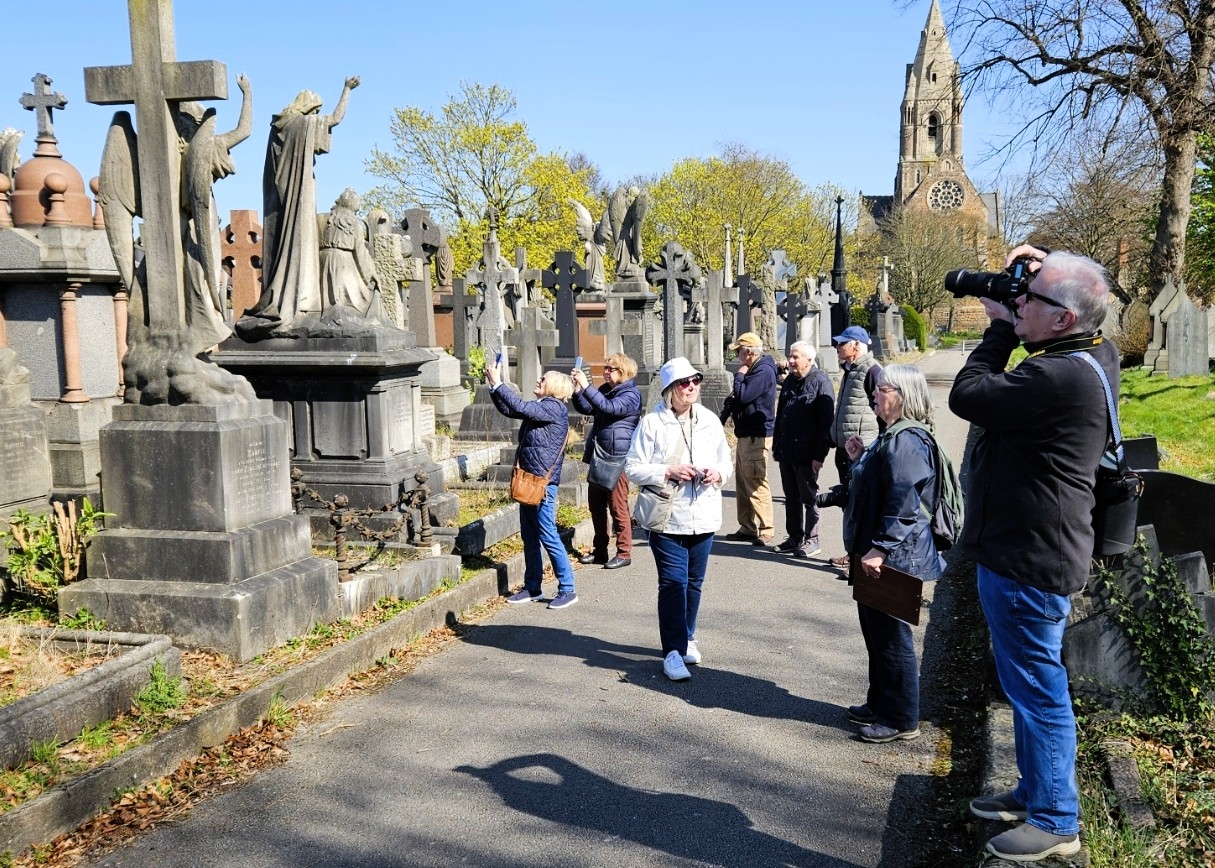
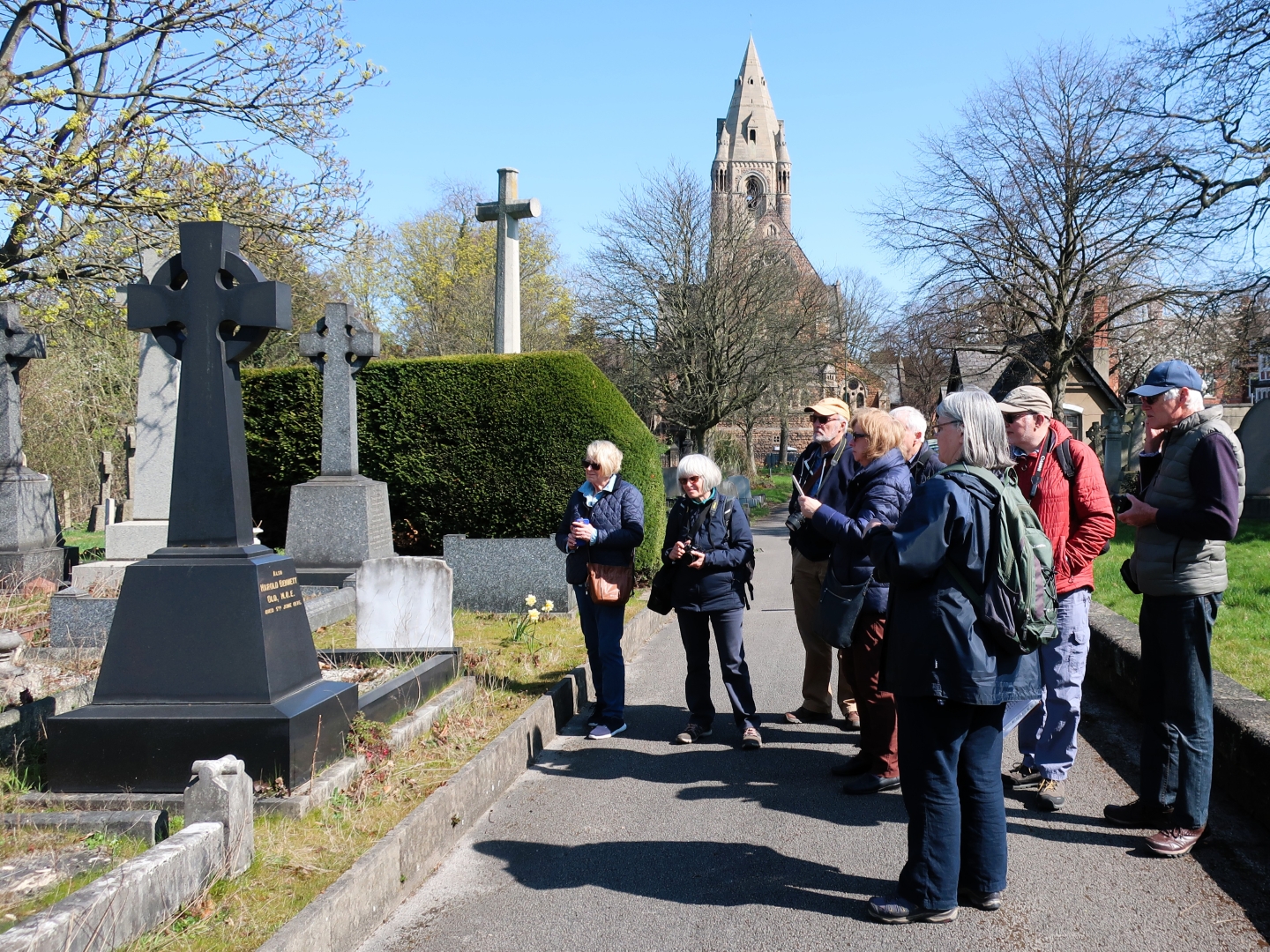
On Wednesday April 2nd nine members of the Photography for Fun group visited Rock Cemetery in Nottingham for a photoshoot. We had arranged to meet up with Yvonne Wright, a local historian who is passionate about the cemetery and had agreed to show us around this fascinating and historic place.
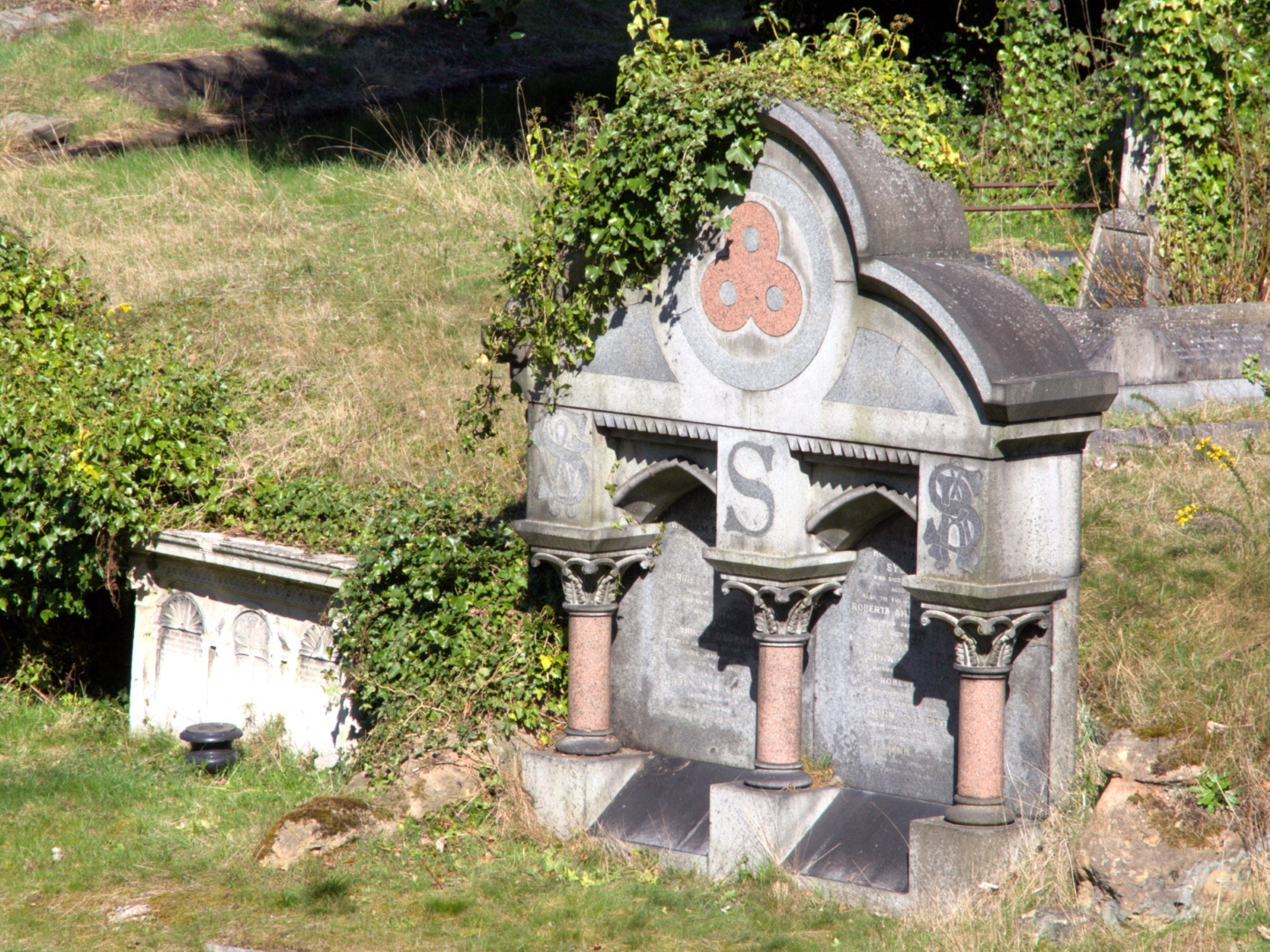
Rock Cemetery, (official name Church Cemetery), was founded in 1848 on the site of an old sandstone quarry bounded by Forest Road and Mansfield Road and overlooking Forest Recreation Ground. It covers thirteen acres of land and is the final resting place of around 43,000 people in just over 14,000 graves. These range from the imposing family vaults of the rich and famous, guarded by angels and obelisks, to the stone slabs recording many of the poor buried together in a sandpit in the centre of the cemetery.
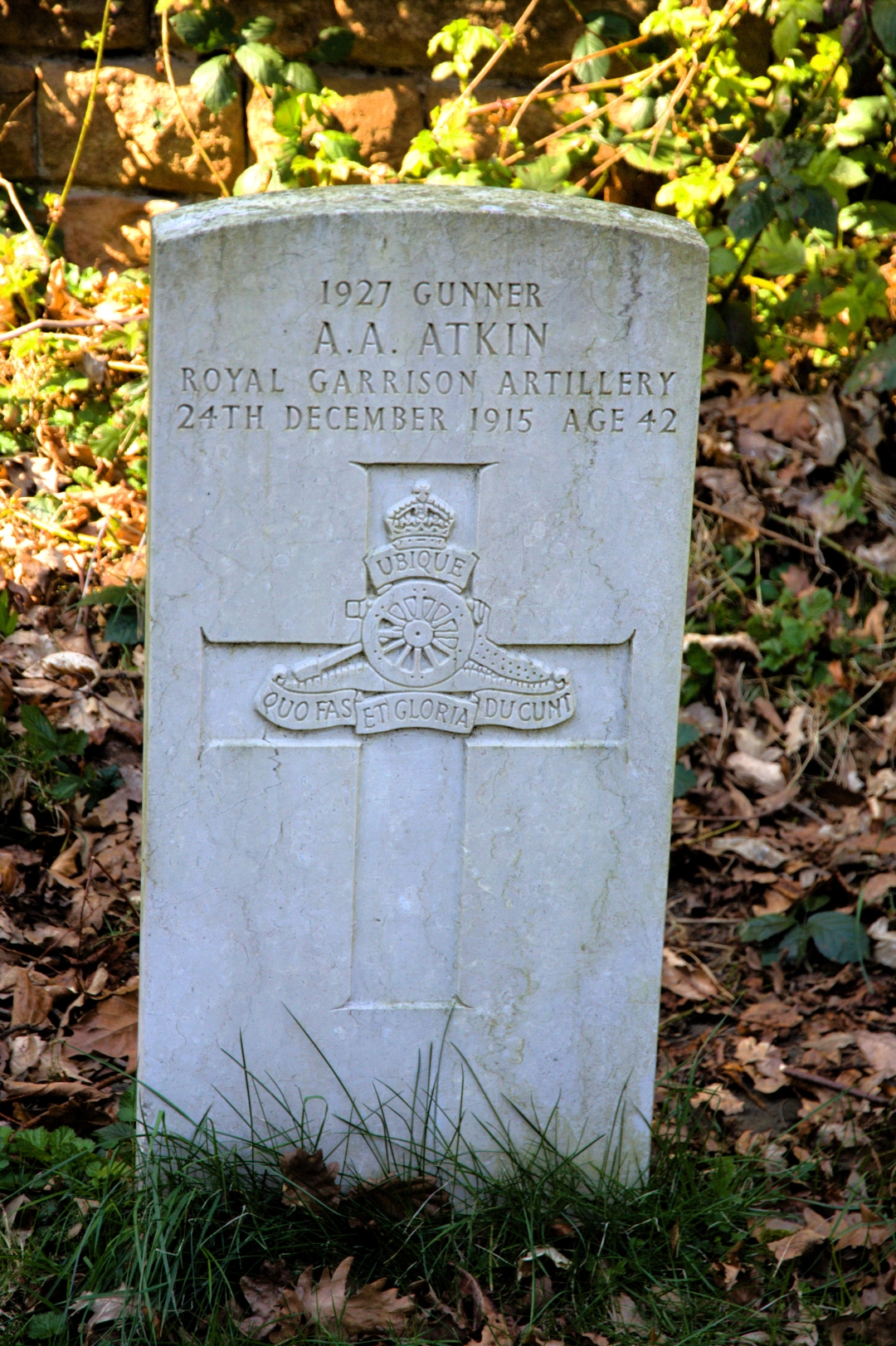
In this tranquil and poignant spot, a small sheltered area they call St. Ann’s Valley, surrounded by a wall of arches, are recorded the names of many children interred in groups of twenty or more under heavy grey slabs. Here you can find the name of Joseph Fenwick and in the column for his age the words " five minutes". Nearby a solitary white cross stands out to commemorate soldier Albert Atkins of the Royal Garrison Artillery. He was wounded during the First World War and returned to his home in Nottingham where he died in1915 and was buried in a pauper’s grave. Years later the Commonwealth War Graves Commission heard of Albert and arranged to have a more suitable memorial erected.
In contrast some of Nottingham's "rich and famous" are also buried here. The cemetery was designed by Edwin Patchitt whose tomb stands on a grassy plot in a prime spot. You can also find the names of the great Victorian architect Watson Fothergill and Marriott Ogle Tarbotton who designed Trent Bridge and the city sewer system.
In all we spent an enjoyable and productive two hours exploring many of the forgotten corners of the site, where the leaning monuments overgrown with moss and ivy added to the atmospheric charm. We were lucky to have Yvonne to guide us and took lots of photographs which we will share and discuss at one of our regular monthly meetings.
Judith Moore, Photography for Fun