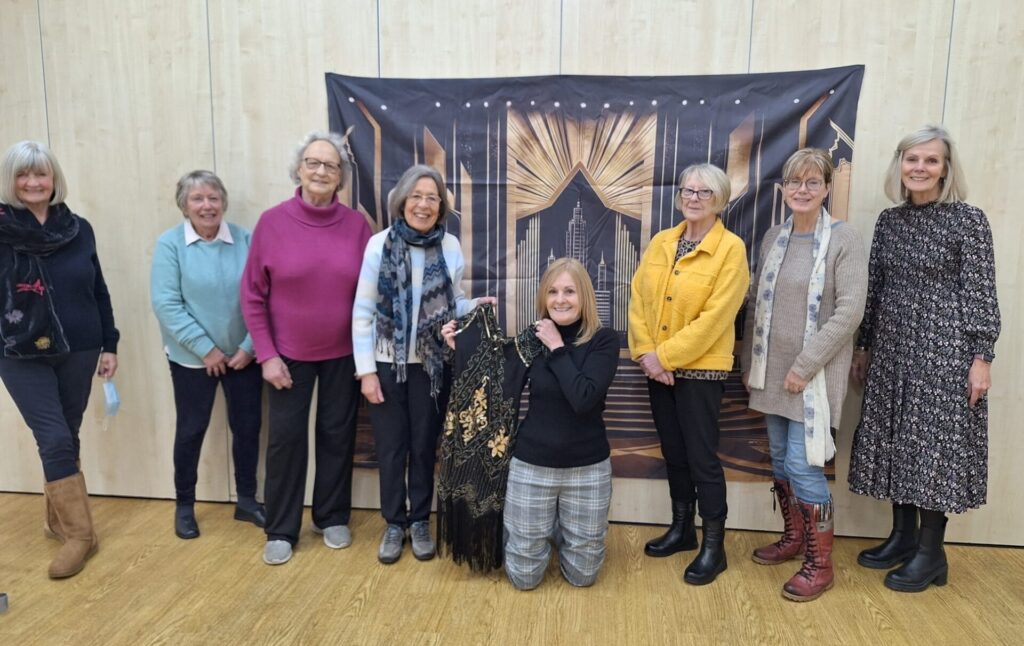
On Tuesday 6 January 2026, a very cold and icy morning, the Fashion Group gathered to investigate that vibrant decade known as the Roaring Twenties.
Post WW1, the 1920s began as a period of economic prosperity. Industry expanded, as did consumerism, bringing with it a decade of rapid cultural change.
Hollywood ramped up movie production. The frivolity and fun of jazz music, cocktails and the Charleston evoke images of a decadent high society.


British life became ‘Americanised’ with film, music, dance, fashion and chain stores like Woolworths.
During the war many women had been employed in factories, which gave them a wage and a certain degree of independence.
The fierce efforts of the suffragettes secured the vote for women over 30 in 1918, and from 1928 this age was reduced to 21, the same as it was for men.
Confidence and empowerment were reflected in the fashions women wore - shorter dresses and shorter hair.
Watching the two videos linked below, enabled us to appreciate how changing attitudes to life were reflected in 1920's fashion.

Fashion was undoubtably influenced by French couturiers of this period such as...
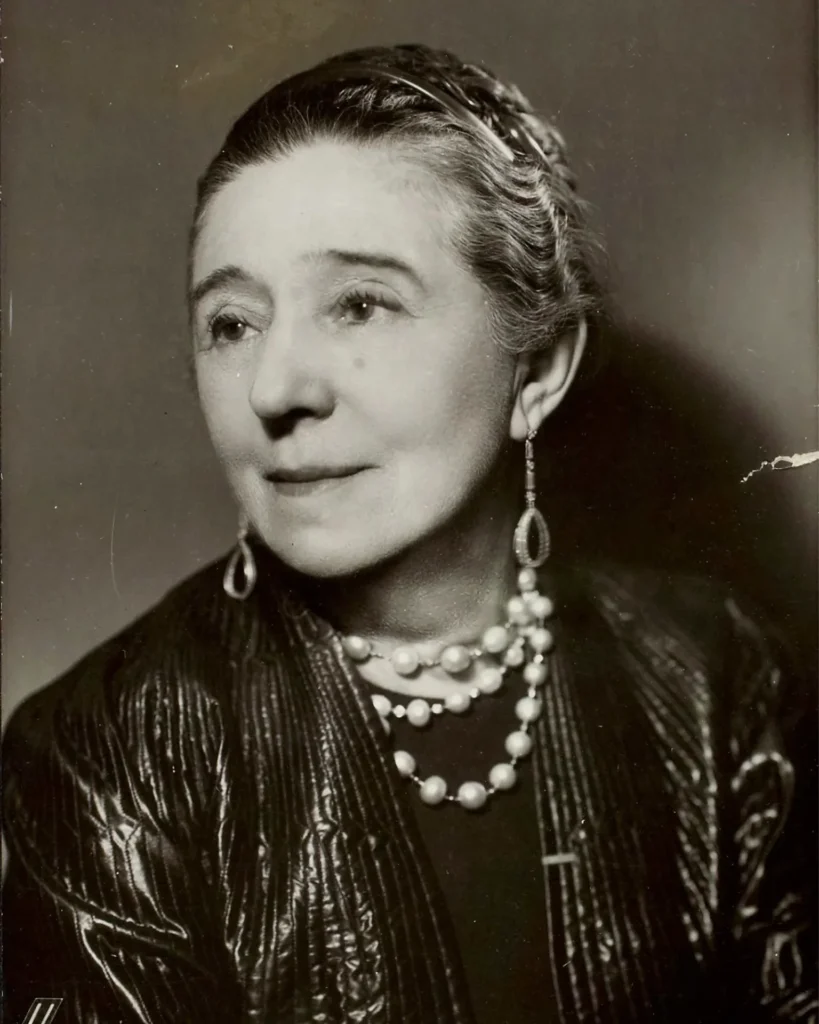
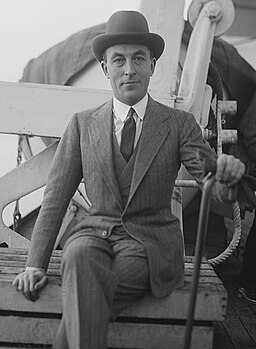
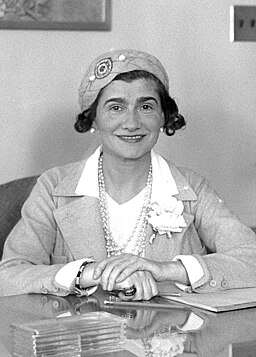


.jpg)
There is much to say about each of these couturiers. Here are a few points of note...
- Hit by the 1929 stock market crash, Patou tried to save his brand by creating ‘Joy’, once known as the most expensive perfume in the world.
- Chanel had a stark, frugal early life, having been sent to an orphanage at the age of 11 when her mother died. Yet by 1918 she had purchased a building in one of the most fashionable districts of Paris and opened an early incarnation of a fashion boutique, specialising in clothing, hats and accessories. There is an excellent BBC Arena programme about Chanel which can be accessed from this link
- Lanvin is the oldest French fashion house still in operation.
But was this how things were for ordinary people in Britain? The group considered whether our forebears were part of the Roaring Twenties party scene, or struggling to make a living.
After WW1 England and Wales experienced a period of economic uncertainty. By 1921 over 2 million people were unemployed and there were also over 200,000 widows who had lost their husbands in the war. To add to this, the coal mine owners, who resumed control of the mines after a period of nationalisation during the war, announced they would cut miners wages. Rejecting the wage reduction, miners were locked out of the pits on 1 April 1921, and many or most of the 1 million mineworkers did not work again until July 1921, having been forced to accept the reduction in wages. This is evidenced on the 1921 census, where miners declare themselves as 'out of work' or 'on strike'.
Without a Welfare State to support families who were not earning a wage, it is hard to envisage how people managed to clothe and feed themselves.
Members of the group shared photos of family and friends taken in the 1920s which gave us some notion how ordinary people dressed. Jenny also brought a beautiful, delicate, beaded purse as well a hand-crafted gold sovereign pouch to show the group.
And here we are...