In July 2026, having had little time to collaborate on topics for the session, Jane and Sharan concluded it would be a Mix and Match event.
We spent a short time looking at the 1960s beehive hairstyle, created by Chicago hairstylist Margaret Vinci Heldt in 1960.
We then picked up on the Met Gala and its format today, but there was also a historical element included too.
The event is more formally referred to as The Costume Institute Benefit, which gives us a hint that it’s a fundraiser (attended by a lot of wealthy people).
Please check out this link below to see some outstanding haute couture...
https://www.glamourmagazine.co.uk/article/what-is-the-met-gala
It’s scheduled annually, occurring on the first Monday in May, in New York.
The venue for the Gala is at The Metropolitan Museum of Art, which was founded in 1870 by a group of businessmen, financiers, and leading artists and thinkers of the day who wanted to create a museum to bring art and art education to the American people.

The Metropolitan Museum of Art
Fifth Avenue, New York
Image source unsplash.com
Eleanor Lambert (1903 - 2003) became the first US fashion publicist, her work ushering in a new era of fashion in America. Eleanor is credited with being the creator of the Met Gala in 1948. Click the link below to read more.


Anna Wintour, American Vogue magazine's former editor-in-chief, has been a chair member of the museum's gala since 1995.
The New York City's Metropolitan Museum of Art's Costume Institute is formally named 'The Anna Wintour Costume Center' in her honour.
The Met Gala benefit, continues to encourage donations from New York's high society.
The Gala always has a theme. This corresponds to annual Costume Institute exhibitions. Guests are expected to adhere to the theme when curating their (usually haute couture) costume.
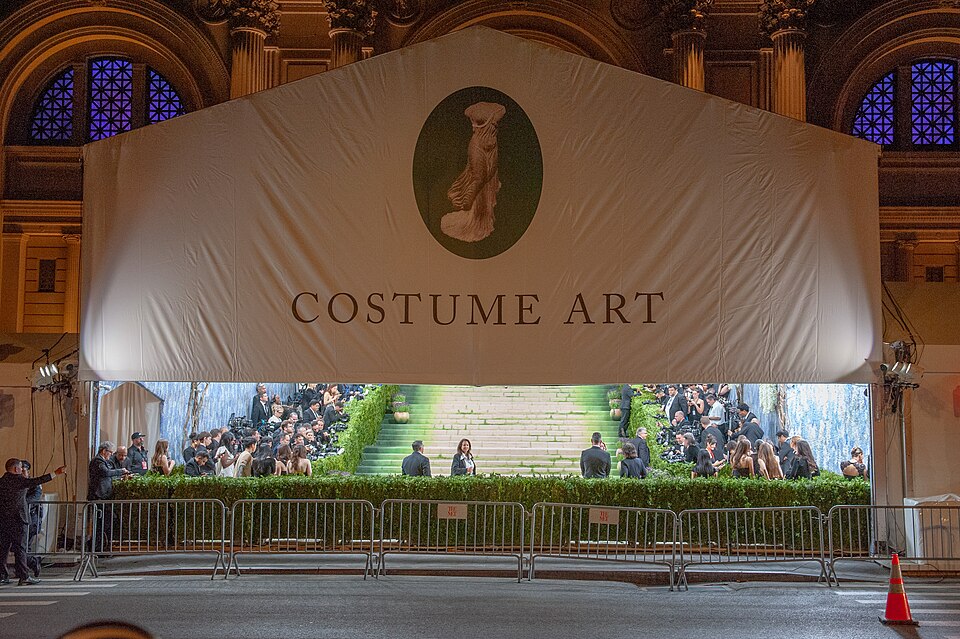
Known as 'the world's most exclusive party', an invitation is highly sought after. Invitees attending the Met Gala in a given year are typically personalities widely perceived to be culturally relevant to contemporary society. Hence the gathering of press for the 2026 Gala in the following image.

After coffee, the topic shifted completely to 'Women's undergarments up to the 20th century'.
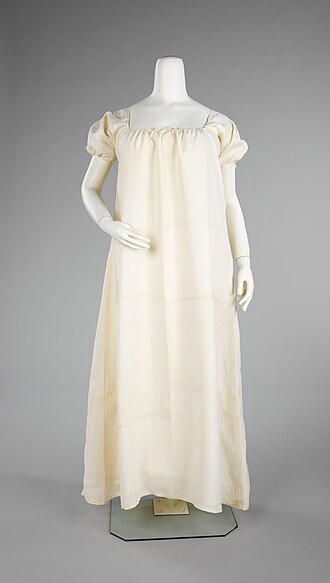
First came the shift or chemise - a loose, linen or cotton tunic worn closest to the skin. It's job was to protect expensive outer gowns from body soils, since dresses were rarely washed.
In the 1700s we had stays. Heavily stiffened with whalebone (baleen) or reeds, they weren't meant to cinch the waist into an hourglass, but rather to flatten the torso and force a rigid, conical shape.
Between the 1740s and 1780s there were panniers or side hoops, which were under-structures made of wicker or whalebone hoops that extended the skirts massively to the sides while keeping the front and back flat. This created a dramatic, wide canvas for court dress.
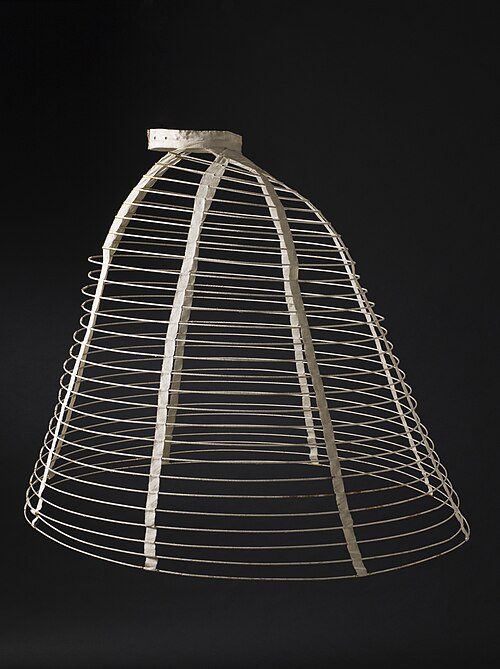
The corset and crinoline revolution came in the 1850s. Instead of wearing up to six layers of heavy, hot petticoats to get a full skirt, women wore a lightweight structure of flexible steel hoops. This offered unprecedented physical freedom while achieving a massive silhouette.
In the 1870s and 1880s came the bustle, shifted the fullness from all-around volume to the back. Undergarments evolved into horsehair-padded cushions or collapsible steel "cages" strapped around the waist to support heavy fabric draped over the rear.


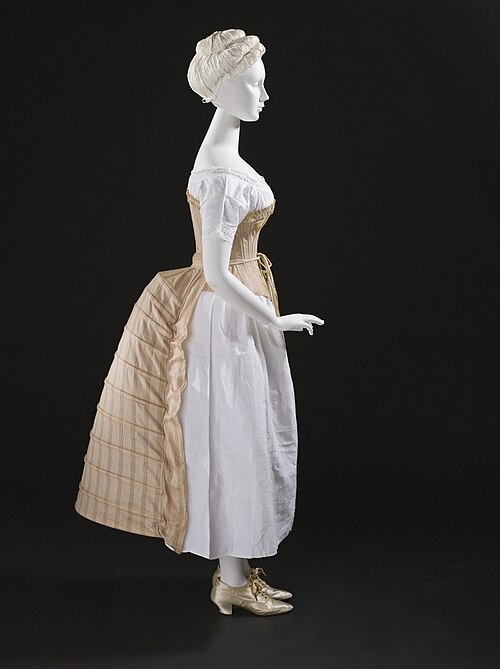

The 1900s brought the Edwardian era and the S-bend corset. Mistakenly claiming to be better for the posture, this corset pushed the torso forward and the hips back, creating the famous, hyper-exaggerated "S-bend" silhouette.
3 "Fun Facts"
- The "No Panties" Reality: For most of this history, women did not wear closed drawers or panties as we know them. Mid-19th-century drawers were "split-crotch" (two separate legs attached at the waistband with an open seam in the middle).
- The Layering Order: Women wore their boots before putting on their corsets. Once tightly laced, bending down to tie or button boots was incredibly difficult.
- The Industrial Connection: The mass production of the cage crinoline in the 1850s was only possible because of advancements in the steel industry. Underwear history is heavily tied to the Industrial Revolution.