Why is Art essential during war?
Members agreed that art and culture do far more than decorate a crisis. They shape public morale, document human suffering, report on conflict and help people process trauma.
“If we don’t have culture, what are we fighting for?” attributed to Winston Churchill, when urged to cut cultural funding in WWII.
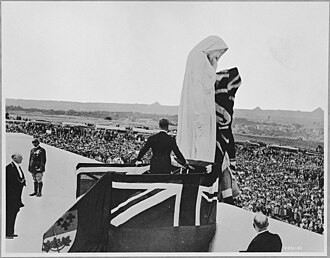
Vimy Ridge
The Canadian National Vimy Memorial in northern France was chosen as a superb example of the sculptor’s art.
Two pylons rise from a vast limestone base, flanked by 20 sculpted figures.
The most affecting is Canada Bereft, a mourning figure echoing the Virgin Mary, gazing over the names of the 11,285 Canadians who died or went missing in WW1.
When WW2 broke out, Vimy was turned into a recruitment poster - a direct appeal to Canadian patriotism.

A serviceman’s need for art
John Price shared the artwork and stories of his father, Stanley, a Royal Engineer who served in northern India in WW2.
Tea, conflict and a tea break
Just before the break, the group looked at paintings of tea and conflict: Stanley Spencer’s murals for the Sandham Memorial Chapel (National Trust), the Boston Tea Party, and tea’s vital role in the Blitz.
The horror of war
Sharan chose John Singer Sargent’s haunting Gassed to show the futility of war, and used a YouTube video to explain it in detail. Otto Dix's Storm Troops Advance under Gas Attack showed a similar horror from a German perspective.
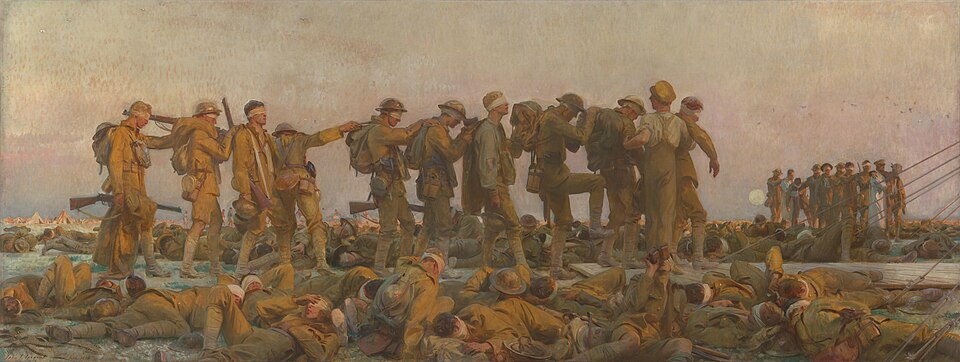
Image source and licence
The Nuremberg Trial
Margaret Brook introduced the colourful, richly detailed work of Nottingham artist Laura Knight. Her Nuremberg Trial is a world away from the wartime portraits she painted earlier to provide propaganda, heroes and role models.
Is a photograph art?
Richard set a challenge: look at three WW2 images and decide whether they count as art. The images of Eileen Dunne and the Blitz V-2 boy tugged at everyone’s heartstrings, and it was easy to see why Eileen’s portrait became so famous.
The session ended with John McCrae’s In Flanders Fields and the red poppy, a powerful and enduring symbol of remembrance.
Feature Image, Dame Laura Knight, The Nuremberg Trial (1946)
Image source and licence
