Before the invention of photography, a painted, sculpted or drawn portrait was the only way to record the appearance of someone. These paintings or sculptures often displayed the power, importance, virtue, beauty or wealth of the sitter.
Self-portraits became increasing popular in the 17 th century. They were not only a reflection of the physical appearance of the artist but also their artistic style, technique, and creativity. They gave the artist opportunities to experiment with different poses, lighting and composition to convey their unique personalities and artistic vision. Effectively, artists used self-portraits to ‘advertise’ their work.
Our September session kicked off with an entertaining quiz from Sue Henson who had gathered together a series of ‘Mystery Portraits’ for the group to discuss.
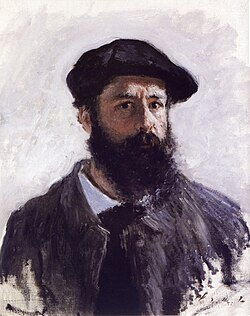
'Self portrait in Beret'
One of Sue's mystery portraits
Find out who it is here Image source and licence
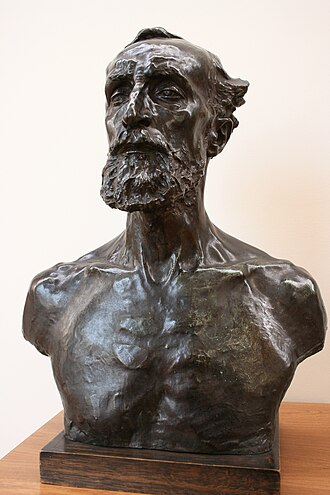

Margaret Brook inspired the group to reflect on the sculpture of Jules Dalou (1883) by Auguste Rodin, as seen above.
Sharan wrapped up the session with a quiz on a selection of self-portraits. One of these was a Rembrandt that she had recently viewed at Upton House, near Banbury. Did you know that most people only glance at a painting for 8 seconds? The Rembrandt encourages a slow-looking experience which Sharan found highly rewarding.
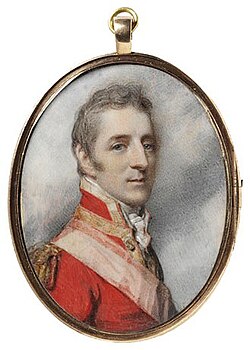
Miniature portrait of the future Duke of Wellington in 1808 by Richard Cosway
Image source and licence

We watched several short videos on portraiture during the session:
- A brief history of portraiture
- Miniature Portraits
- The decoupage screen
Click here for details of Lord Byron's decoupage screen
in the National Portrait Gallery
Unfortunately, the clock was against us, and we didn’t have time to watch the video on Elisabeth Vigee Le Brun ‘The female artist who succeeded against all odds’.
Our next meeting will be on Monday 19 October, when we shall be reflecting on ‘Dark’ works of art.