On 20 October, the Arts Appreciation Group reflected on
- ‘The Last Supper’ by Leonardo da Vinci
- Robert ‘Mouseman’ Thompson
- A video introduction to Art Nouveau
Margaret Brook gave an inspiring presentation on her recent visit to Milan where she had been successful in obtaining tickets to visit ‘The Last Supper’ by Leonardo da Vinci.
The group were fascinated to hear about this world-renowned painting and the history of its development and survival.
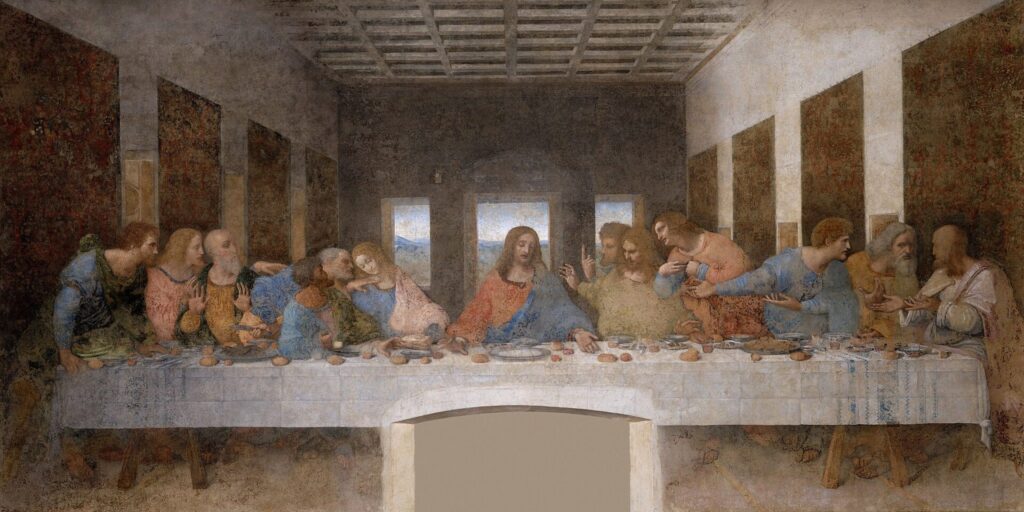
Leonardo Da Vinci - The Last Supper. dated to c. 1495–1498, housed in the refectory of the Convent of Santa Maria delle Grazie in Milan, Italy

Janet Shaw had the group’s full attention when she shared her passion for the work of Robert "Mouseman" Thompson (1876-1955), who was a furniture maker in Kilburn, Yorkshire.
His speciality was beautifully carved oak furniture, that featured a carved mouse. Southwell Minster features woodwork by Robert Thompson. Visitors can find his work, including modern clergy seats, stools, and 1949 altar rails, hidden within the Minster.
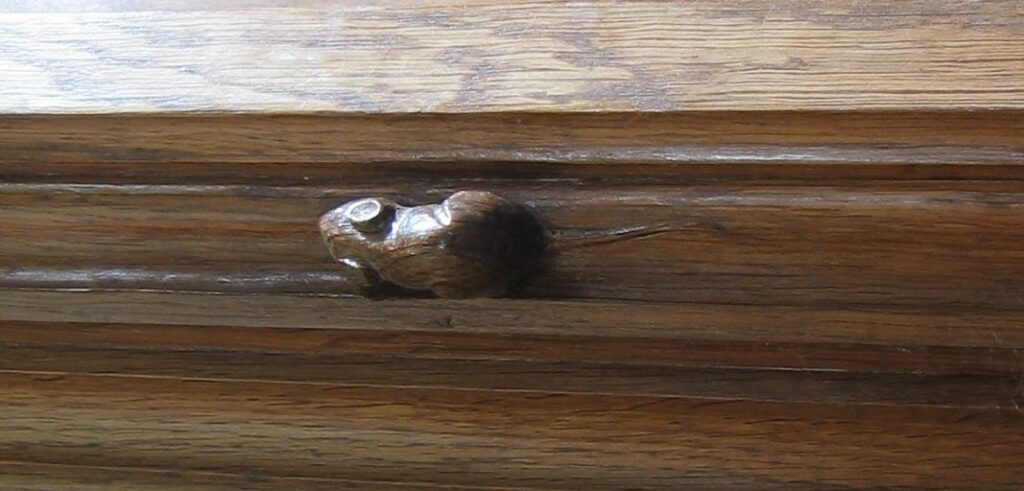
Robert "Mouseman" Thompson's trademark carving on the altar rail in Kilburn Parish Church

Janet had visited his Kilburn factory and was able to show the group a cheeseboard she purchased there.
Susan Titman showed the group examples of a William Morris pillowcase and tea towels from the Arts and Crafts era, including the famous Rex Whistler mural at Plas Newydd, a country house in Anglesey, Wales. As seen below, this 18th-century house features a large, 58 foot "Capriccio" or fantasy landscape mural, painted by the artist Rex Whistler for a new dining room in the 1930s...
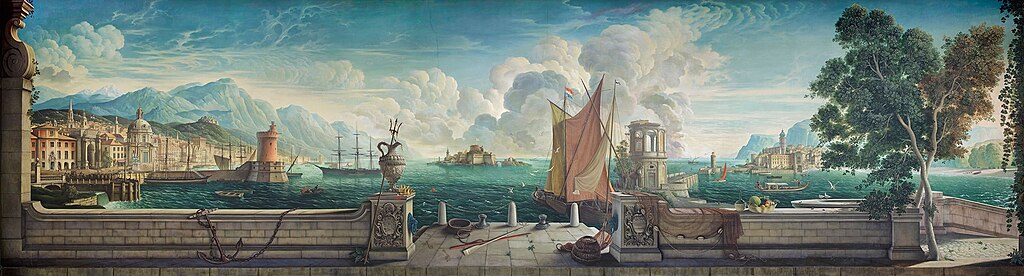

Art Nouveau
With its curves, flowers, beautiful women and bold colours, Art Nouveau became a truly international style. It embraces almost every aspect of art, architecture and design. Beginning in 1893, by 1900 it had spread all over Europe.
The video introduction viewed by the group can be seen here. It concentrates on the work of the architect, Victor Horta. The group were ‘wowed’ by the beauty of buildings such as the Hotel Tassel and the Hotel Solvay.
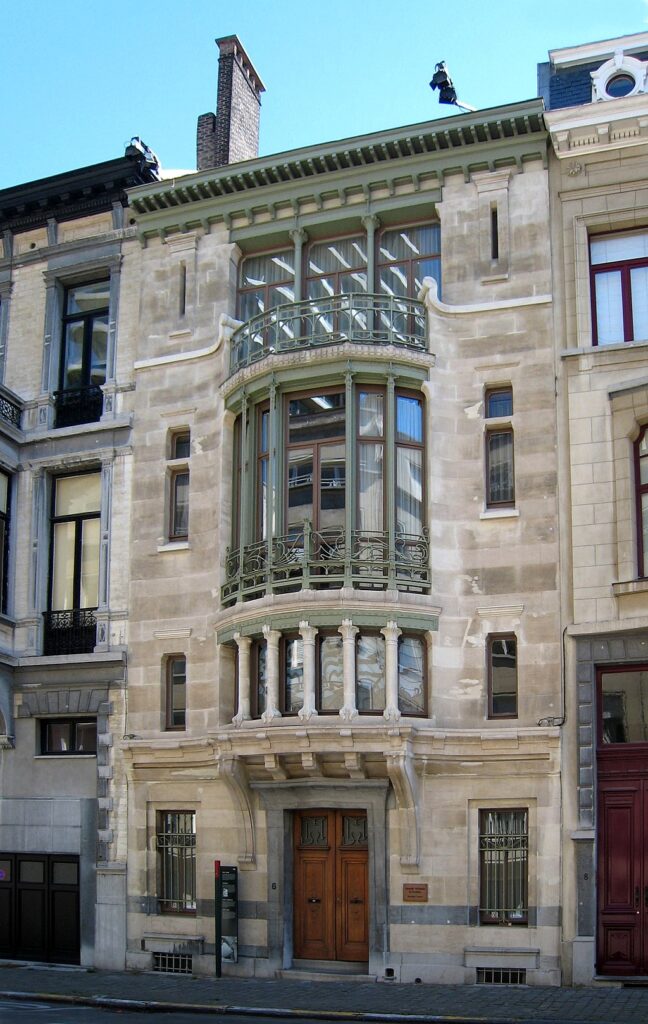
Façade of the Hôtel Tassel (Tassel House), Brussels, Belgium by Victor Horta (1892–93)

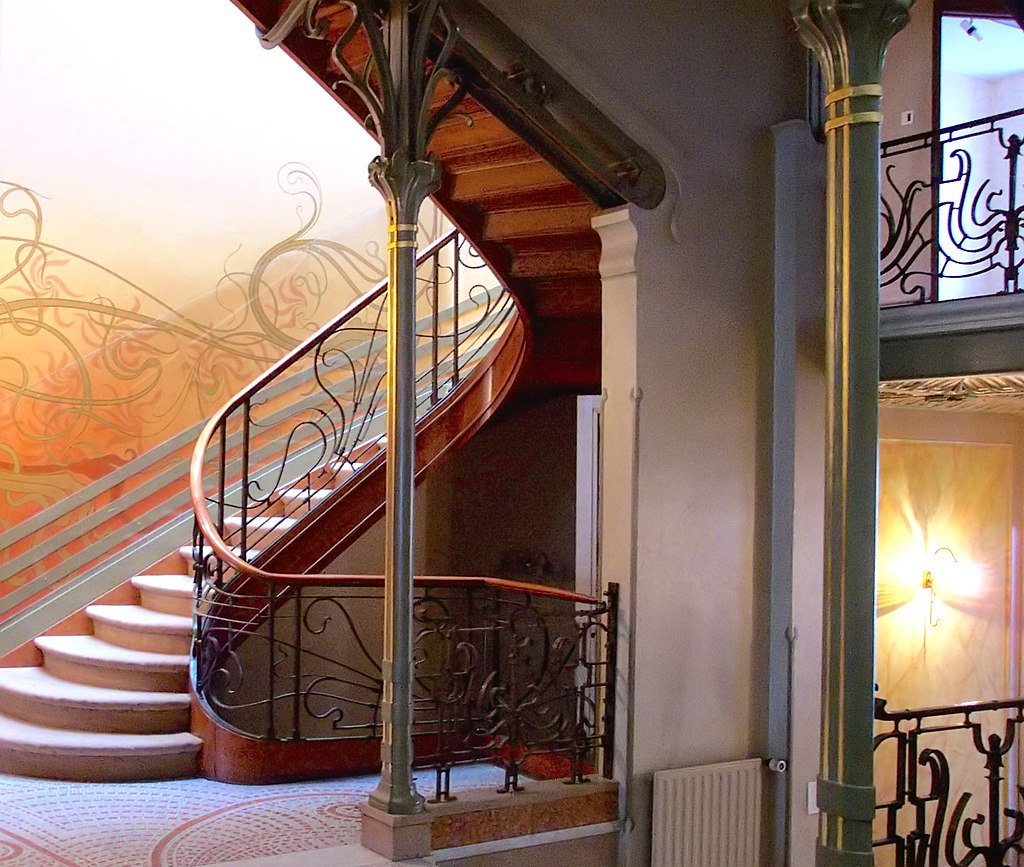
Stairway of the Hôtel Tassel, Brussels, Belgium designed by Victor Horta (1892–93)
Note the whiplash curving lines, characteristic of the Art Nouveau period

Jane Baxter shared two posters which she had purchased for her kitchen many years ago, not realising that they were Art Nouveau.
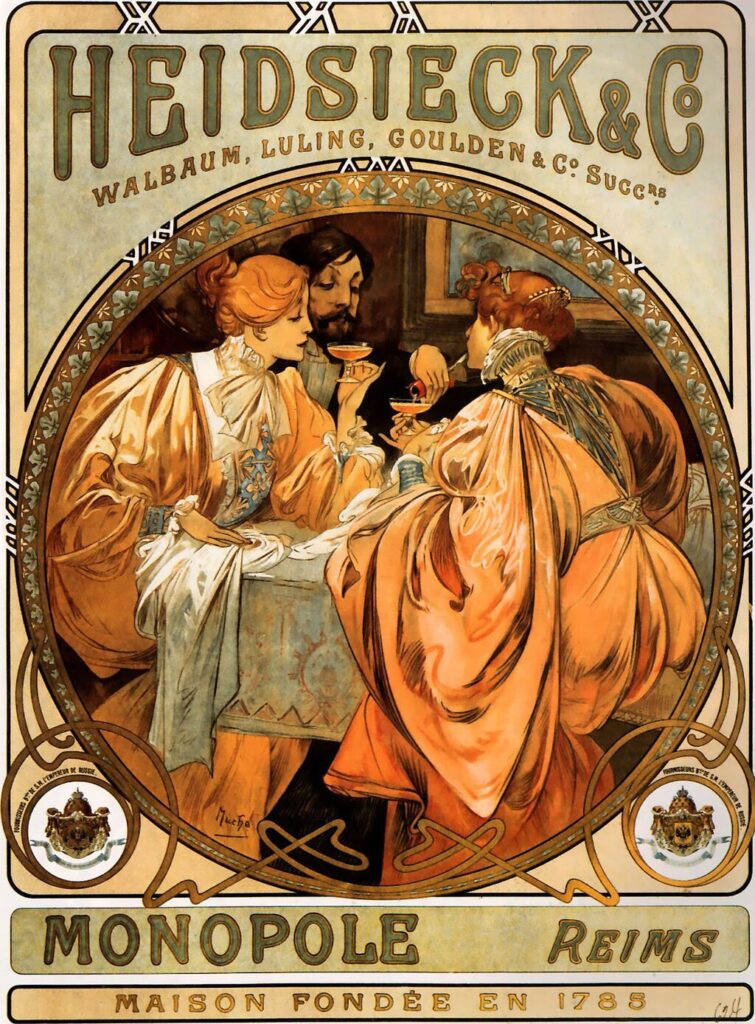
Alphonse Mucha - Heidsieck and Co., 1901

Mucha supplemented his income with advertising posters. The curved lines and muted tones are characteristic of Art Nouveau.
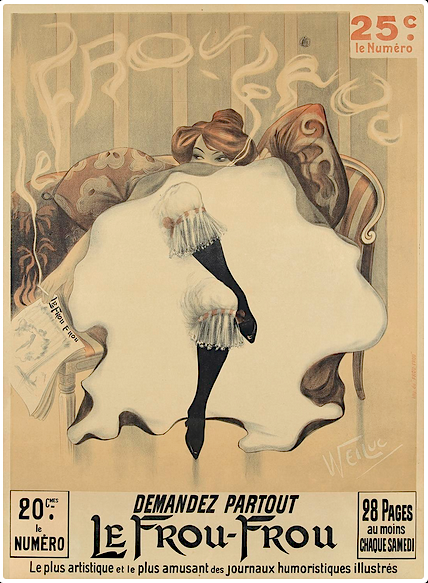
Lucien- Henri Weil - Le Frou Frou, 1901

Commissioned to promote a new French satirical magazine, Le Frou Frou, this poster was audacious and provocative for its time.