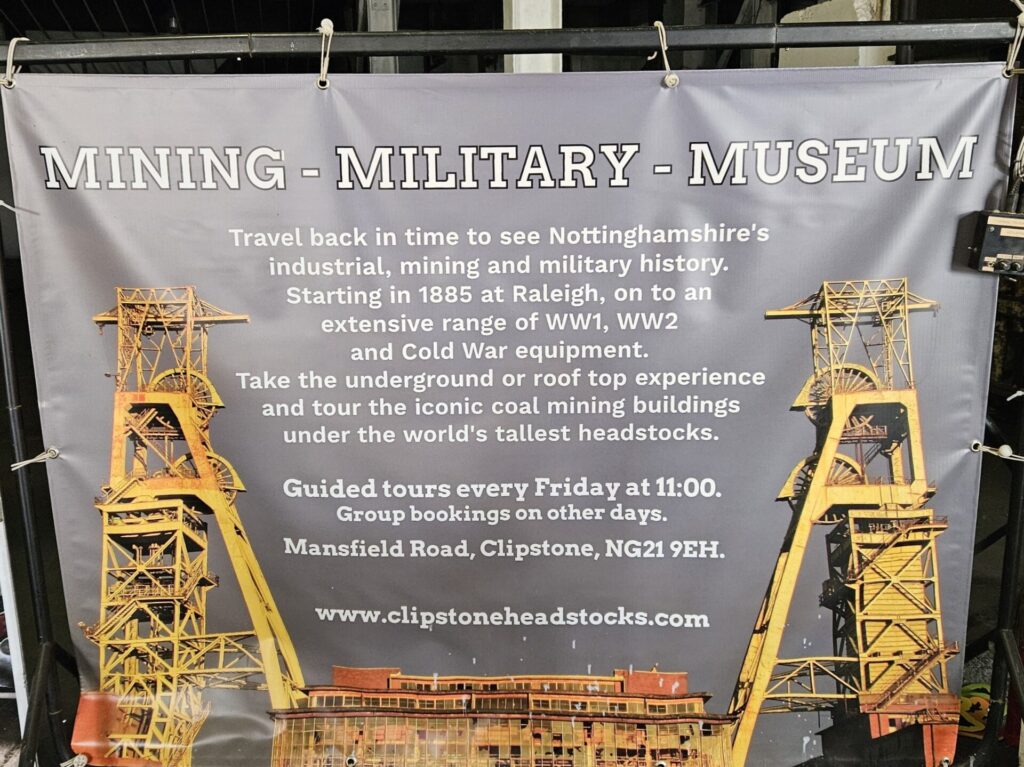
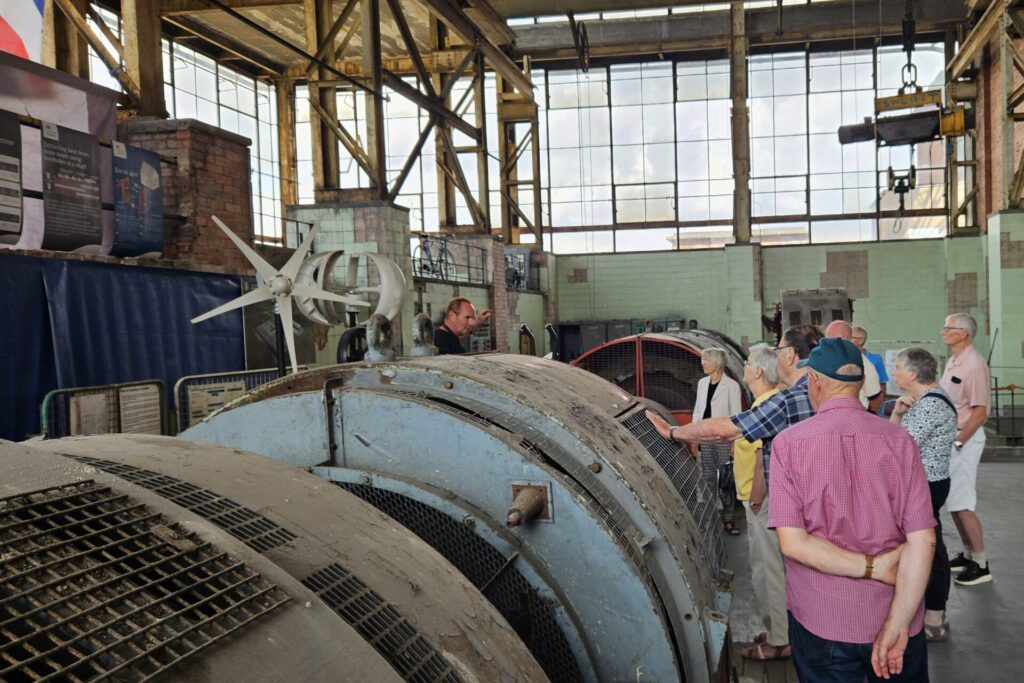
Since the closure of Clipstone Colliery in 2003 I have passed many times and witnessed the deterioration of the buildings and headstocks and wondered if they would eventually be saved as they had been listed in 2000. In July 2026, members of the local history group had the opportunity to find out when we went to the museum that recently opened on the site.
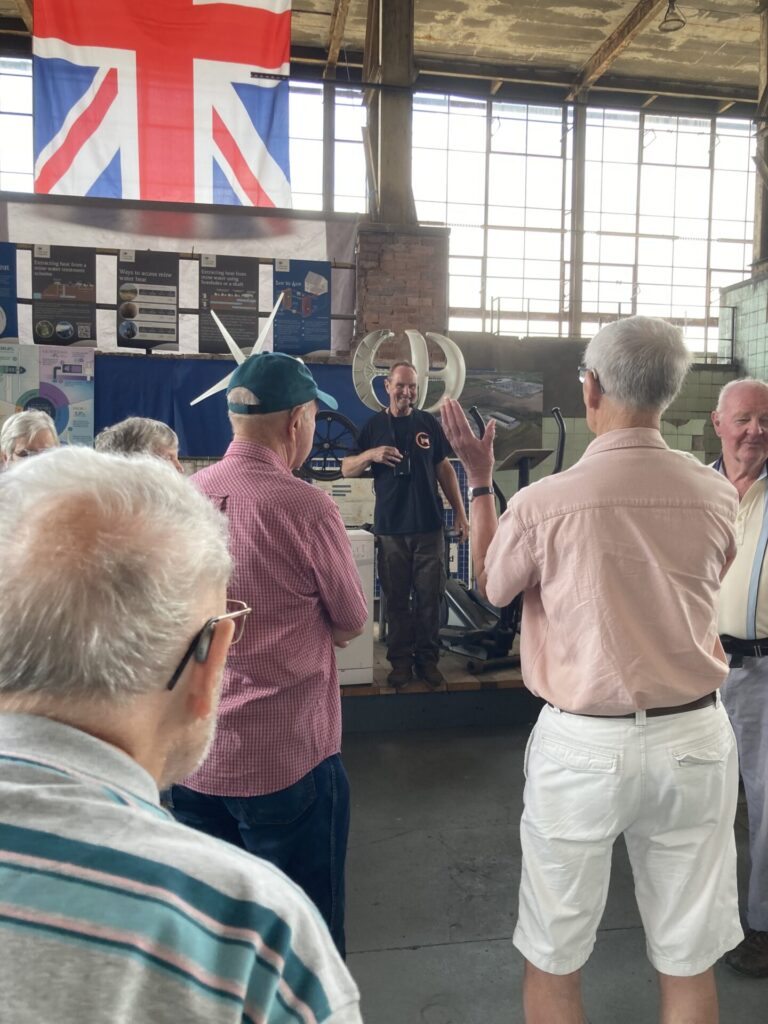
Our guide was Stuart Mills, who I later discovered had bought the site in 2020. Enthusiastic volunteers have brought back to life not only the story of the colliery but also other history of Nottinghamshire. For example Raleigh is represented by a time line of their cycling products starting with a pennyfarthing and including cycles that my children owned.
Unlikely innovations from Nottinghamshire companies and individuals include HP sauce, tarmac, shin pads, circular saw, video recorder as well as traffic lights, the Spinning Jenny, ibuprofen, John Player cigarettes and vertical take-off jets, all represented by artefacts or pictures.
The Clipstone Camp display showcases the largest army training camp in Britain, which accommodated 30,000 troops at a time during WW1. Exhibits include the huts where soldiers stayed, remnants of their time there, the artillery they used, and even a Model T Ford featuring genuine bullet holes in its door that I found truly evocative.
The wartime theme continues into 1939 with an exhibit displaying equipment, vehicles, and a gallery detailing Nottinghamshire’s significant role in WW2.
The Cold War period is represented by an extensive collection of unusual military vehicles, including amphibious vehicles, scout cars, and an enormous tank equipped with four anti-aircraft guns capable of firing 4,000 rounds per minute.
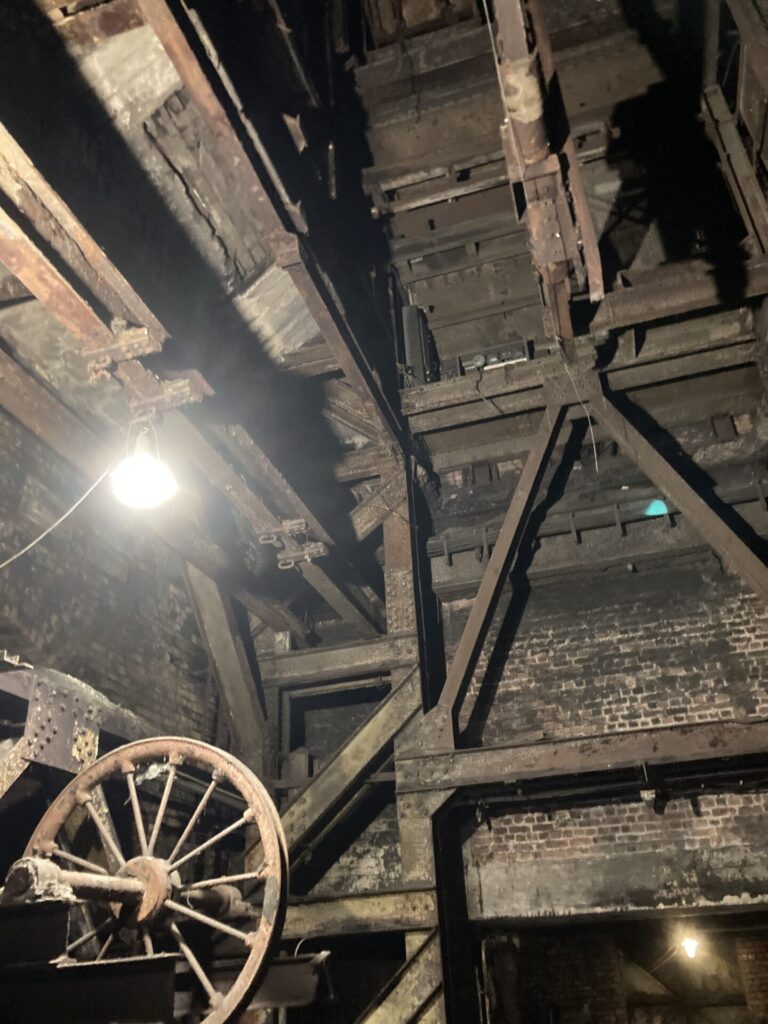
We visited two buildings to learn about mining on the site.
The first shaft building was for the use of men. The mine lift cage was a double decker, and 35 men squashed into each cage to go up or down the 920 metre shaft at 30mph. Up to 1300 men worked at the pit at a time, and over the years, 57 died, including a 15 year old on his first day.
The other headstock building was dedicated to coal extraction. The coal came to the surface in skips, with up to 16 tons of coal in each skip. These replaced earlier smaller skips and resulted in the headstocks being extended to become the tallest in the world.
Mining artefacts were displayed in the winding room which is also used for special events such as concerts.
The museum is open on Friday mornings for public tours and is definitely worth a visit. I certainly discovered a broader spectrum of local history than I had expected and wonder how the site will further develop over time
Report by Sue Robb