At February 2026's meeting we learnt about the low altitude economy, which China is pioneering and pouring large amounts of money into in order to maintain market leadership.
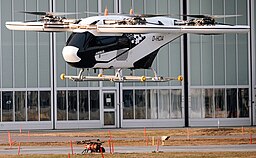
We learnt that the low altitude economy covers a multitude of applications up to 1000m of altitude., including small drones for agricultural or structural surveys, larger drones for packet delivery especially for urgent medical supplies and search and rescue, unmanned aerial vehicles and manned eVTOL aircraft, such as this CityAirbus here....

The driving factors are speed, when compared to surface transport in the urban environment, environmental reasons cutting out the use of fossil fuel consuming engines, and techno-economic evaluations improving productivity and enhancing cost effectiveness within agriculture, for security surveying including surveillance.
We could see that regulatory frameworks are essential for manned vehicles, such as air taxis, but we realised that the general public will not accept being constantly overflown by noisy drones.
In China there are cities with hundreds of approved drone routes already operating, often with vertiport bases with lockers ready to store goods until the purchaser/user comes to collect.
The development of the infrastructure is vital if this market is to reach its predicted $billions size by 2035.
Also the regulatory frameworks must be established and legislated, and approval and safety standard to be developed, otherwise we will have a wild west situation where anything can go .
Finally there is a shortage to talent pilots, engineers and , air traffic controllers etc. to grow this market. We need to get prepared and start catching up with the Chinese!