On Thursday 18th September the group met to learn about the short-lived Pinxton Porcelain and the two key characters who briefly came together to form and run it.
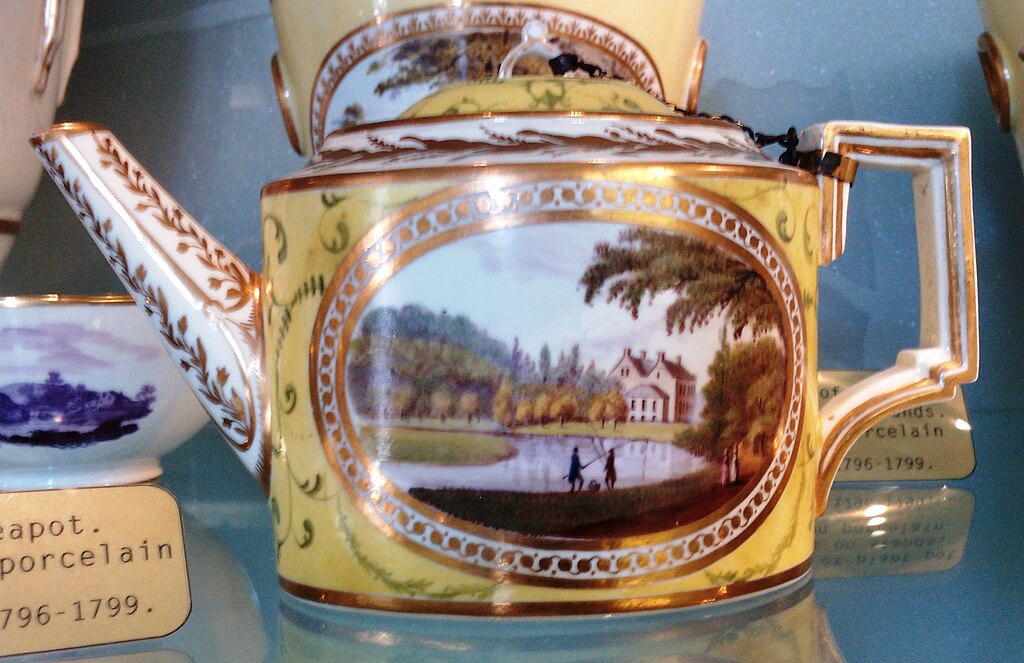
With two keen Pinxton collectors present, Gill Knight and Mark Wilson, we were also able to see and handle fine examples of the bone china that the factory produced. Pinxton Porcelain was a porcelain works created by John Coke and William Billingsley at Pinxton in Derbyshire, England. Construction of the factory commenced in 1796, and it only operated from 1797 to 1813. The short period of operation, particularly those first years of sublime porcelain, makes Pinxton porcelain very rare.



John Coke was a 19 year old youngest son of a vicar, but part of a larger wealthy family based on a huge landed estate at Trusley in Derbyshire. He had no prior knowledge of the industry and was the financier in the operation. He lost money in the Porcelain business, but eventually made money in coal.
Billingsley, who had been trained at the Derby Pottery works, was renowned for the quality of his porcelain painting, particularly his flower painting, but he was also interested in perfecting a porcelain recipe which it is thought he obtained from Zachariah Boreman. Billingsley succeeded in creating very fine, white bone china at Pinxton, some of the finest porcelain of its time, with a beautiful translucency often not present in other English porcelain. It was expensive to make as it had a high kiln failure rate, so there wasn't much of it coming out of the factory. Much of it was decorated with rather simple patterns, but some of it was wonderfully exuberant, and Billingsley's genius was in the many different ways the porcelain was decorated.
Billingsley eventually left Pinxton in 1799 and briefly set up a decorating establishment in Mansfield where he decorated imported porcelain and pottery including some Pinxton porcelain.
The factory was taken over by John Cutts in 1804, however he would choose economy over quality, and the quality from the Billingsley years was lost over its final years.
Pinxton factory ran until 1813 when, after many loss-making years, John Cutts left the business.