We held our first meeting on 3 March, focussing mainly on local artists, and it was good to see the 23 members who were able to participate.
A regular aspect of the group meetings will be the sharing of information and good practice related to the arts movements. Members were recommended to explore Google Arts and Culture. The website/app is an online platform of high-resolution images and videos of artworks and cultural artifacts from cultural organisations throughout the world.
This inaugural session mainly focussed on local art and artists.
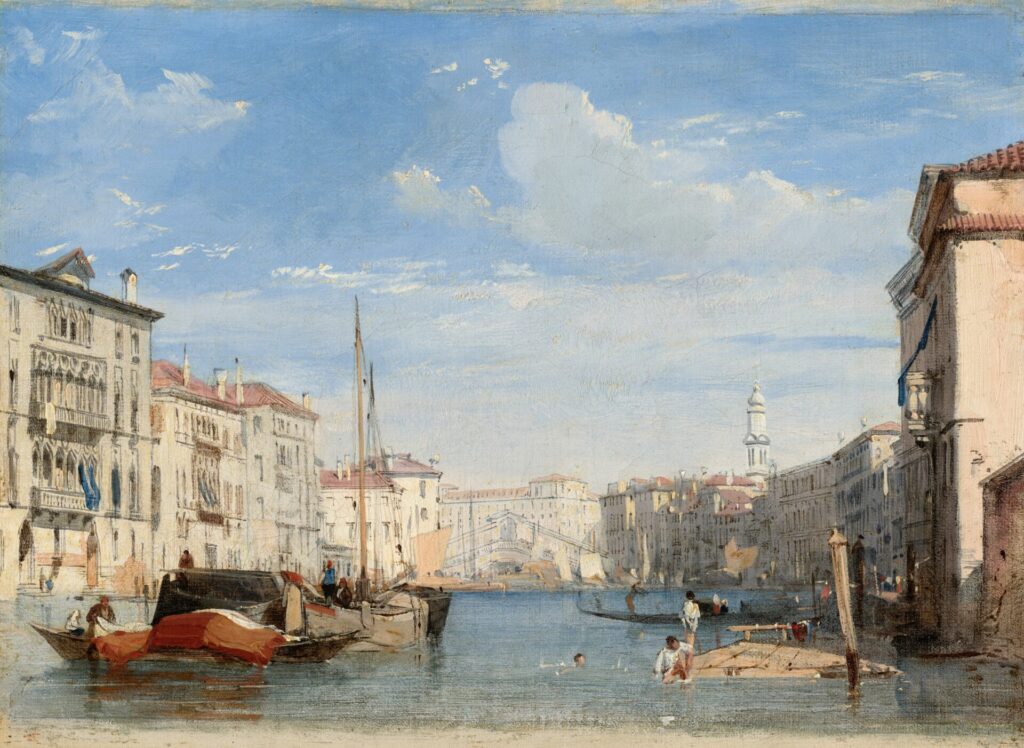
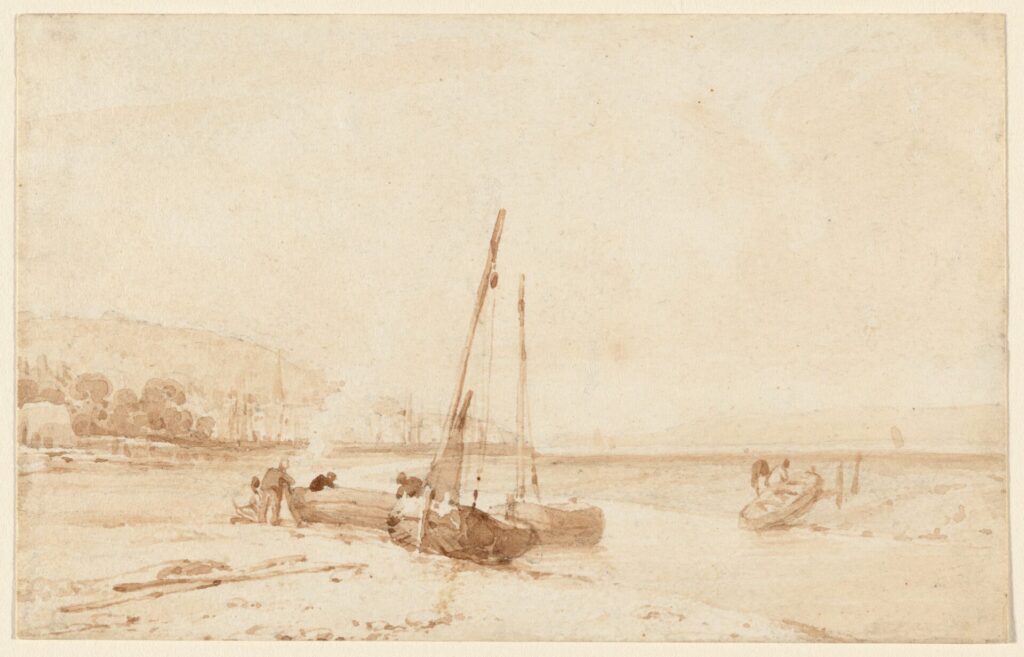
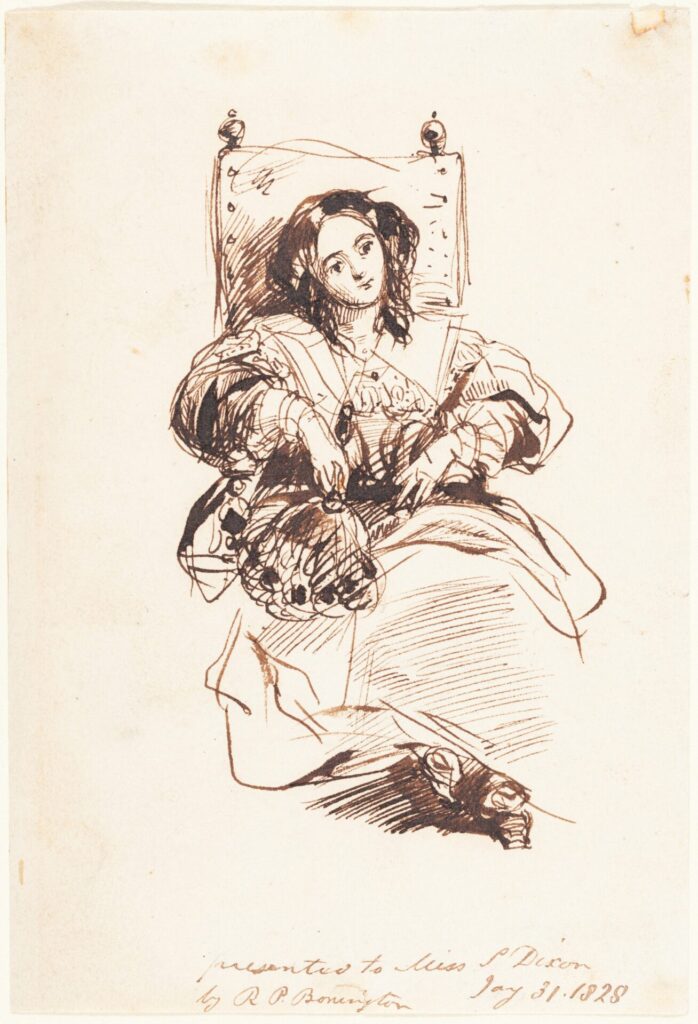
The following three works are from Richard Parkes Bonington (b. 1802, d. 1828), available as open access from the National Gallery of Art.
The Grand Canal, 1826/1827
Honfleur, c. 1821
Sketch of a Woman, 1828
Presentations and discussions covered a variety of topics including:
- The cave art of Cresswell Crags with its carvings on both shards of bone and the cave walls. We learnt that the caves of Cresswell Crags hold the most northerly examples of cave art to be found in Europe.
- Members were surprised to hear that in the Middle Ages, Nottingham was a major centre for the carving, painting and gilding of small alabaster panels for use in religious buildings throughout England and abroad. Most of the carvings were destroyed following the Reformation in the 16th century. However, Nottingham Museum is fortunate to have a rare selection of alabaster panels and statues that would have been hidden to avoid destruction.
- A regular feature of our meetings will be to learn more about local artists. For our first meeting, the life and internationally renowned work of Richard Parkes Bonington was reviewed. Bonington was born in Arnold, Nottingham, but he moved to France at the aged of 14. Unfortunately, he passed away a couple of weeks before his 26thbirthday, leaving only a comparatively small number of paintings to be enjoyed by future generations.
- The history and work of the London-based Royal Academy of Arts (often known as the RA) proved to be of interest. The RA was created in 1768 and is a place where art is made, exhibited and debated. However, equality of access for men and women was not fully introduced until the second half of the 20th century.
- The history and importance of the Nottingham School of Art and Design was explored, and provided a useful insight into how important art was to local manufacturers. The Nottingham School of Art opened its doors in 1843 and was the first government art school to be set up outside of London.
- The work of sculptors, Joseph Else, Charles Doman, James Woodford, Ernest Webb and Robert Kiddey, who all attended the Nottingham School of Art, was discussed. Examples of their sculptures in and around Nottingham, and further afield, can be found at both Nottinghamshire Council Houses, the Raleigh building on Lenton Boulevard, the old Home Brewery building in Arnold and even outside the British Embassy in Tehran.
Our next meeting will be on Monday 7 April 2025 at 2.00 pm. We shall be continuing to explore local artists. Margaret Brook has kindly offered to share her knowledge of the internationally renowned painter, Laura Knight. It promises to be a really interesting session.